
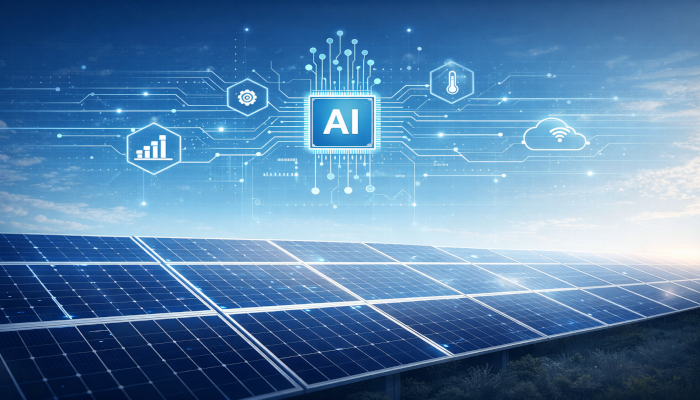
Today, AI in photovoltaic systems is still seen mainly as a tool for watching and collecting data. Production numbers, alarms, forecasts, graphs, and basic reports. This is useful, but it is no longer something new. Almost every modern solar plant already has some kind of digital monitoring. The real potential of AI starts when the system stops only showing data and starts understanding it.
One of the most ignored factors in the operation of a solar plant are the so-called "silent losses". These are small, constant deviations that do not activate alarms or are marked as not important, and do not look like failures. For example: partial dirt, micro shadows, humidity, local temperature differences, uneven panel aging. Alone, each problem looks minor. Together, they cause a real and permanent energy loss. AI can look not only for defects but also for repeating patterns. It can compare similar strings under similar conditions and find differences that a person may not notice. This does not need new hardware. It needs smarter use of the data that already exists.
AI can also help after the plant is finished and commissioned. By comparing real performance with the original project design, the system can detect mistakes in tilt angles, orientation, wiring, layout and spacing, or cable losses that were never reported as defects. This turns AI into a tool for objective feedback between design, construction, and real operation. Each next project and each next solar plant can be better, by learning from the previous one and correcting earlier mistakes.
Even simple tasks like panel cleaning can be managed in a smarter way. And sometimes in the opposite way from what people expect. Instead of AI deciding when to clean the panels, it can decide when it is better not to clean them. By analyzing the real impact of dirt on production, and the cost of water and labor, the system can plan cleaning based on economic benefit, not intuition. This reduces OPEX and makes the operation more sustainable.
Another unused potential is the human factor. Most systems analyze panels and inverters, but not the actions of the people who operate the plant. Reactions to alarms, ignored events, repeated missing checks. These details may look small, but they build up and reduce efficiency. Logs already store this information, but it is almost never analyzed. With AI, it is possible to build behavioral models of operational decisions and see where habits, not equipment, cause losses or risk. This is especially valuable for operators with many sites and different teams.
AI can also connect technical data with something outside of normal monitoring systems. The contractual reality. Construction and maintenance obligations, warranties, responsibility limits, and financial results of each decision. By connecting operational data with contract rules, AI can help decide if a problem is under warranty, operational, or outside both. It can suggest reaction time, order of actions, and priority between plants. This is not only an engineering benefit. This is management value. And many companies lose time, money, and trust exactly here.
There is also a potential that may look unrealistic at this moment, but is possible in the near future. Most systems accept their electrical configuration as fixed. Panels in strings and groups that never change. In reality, the conditions change all the time. Micro shadows, seasonal differences, uneven aging. AI connected through IoT on string or combiner box level could offer dynamic grouping logic. No physical changes. Only smart reconfiguration. This can add a new layer of optimization, with existing inverters and communication systems.
In this sense, the future of AI in solar systems is not only about better graphs or more accurate weather predictions. It is about understanding the system as a whole. Technology, people, projects, contracts, and the environment. All of this already exists as data. What is missing is the intelligent connection between these elements.
© 2025 Smart Energy Group / Nikola Vasilev