
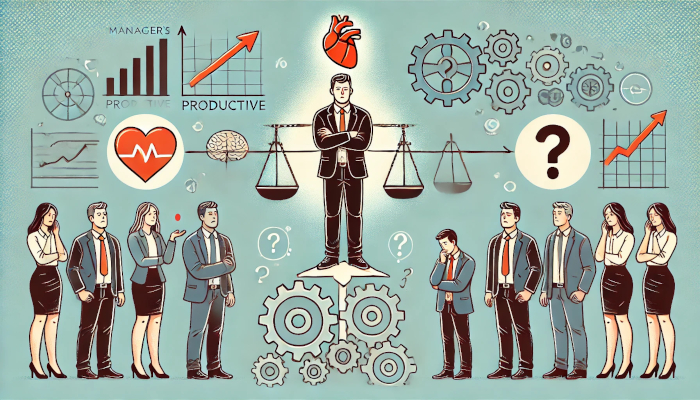
There is something called the "Manager's Paradox": keeping employees at work even though you know they don't do their job well enough, yet you don't have the heart to let them go. You might say, "No way! Anyone would let such people go because results matter, motivation matters, setting a good example matters, and so on...".
Believe me, however, this is often not the case. If you look around carefully at your own workplace or think of people you know, you'll probably find plenty of examples of employees who fit this description. If you're honest with yourself, and if you've ever been in a management role, you will likely remember your own decisions that match this pattern. Personally, I also admit I'm one of those managers.
It's hard to explain exactly why this happens, but clearly, it's psychological rather than logical. Sure, some cases fall under "family connections" or "recommendations and protection," but that's probably less than 20% of the cases. Most of these employees are just regular workers, hired for a certain job. Some are educated and intelligent, others less so; some motivated, others indifferent. But what they all have in common is their lack of effectiveness regarding the tasks they should be performing.
Instead of taking clear action, managers often give a "second chance". First, they see if the person might do something else better. Then comes the stage of saying, "Well, he does something well after all", followed by, "Let's keep him anyway". Later, there's the stage, "Let's train him - he'll improve", and efforts are invested in this. Eventually, you hear, "Maybe we'll find a good use for him someday", and so on.
Someone might say, "Firing someone is a hard decision!" And that's true. But isn't it even harder to sacrifice the company's well-being because the company is just an "imaginary entity" without feelings? But remember, the company does have a "living part": all the other people who work there. And the impact on them is very real.
As a final thought, here's a quote by Donald Trump - deified by some, crucified by others, but painfully correct when it comes to business practices. No political issues here:
"The worst employee is a good employee. A bad employee is fine, because you fire that person right away. A great employee is phenomenal, you want to keep them and cherish them, they're fantastic. But a good employee - you never sort of fire them, but they never lead you to the next level, they just keep their job. They're sort of too good to be fired, but they're not good enough, they're never going to do great... So I always say the worst employee isn't a bad employee, it's just a good or average employee."
© 2024/2025 Nikola Vasilev